

RAG explained: is a technique that enhances generative AI models by utilizing external knowledge sources such as documents and extensive databases.
Vulnerability management is the holistic process of identifying and handling security risks in an organization’s networks, systems and devices. Vulnerability management serves an overarching strategy that describes and outlines the many individual efforts and steps taken to reduce cyber incident risk to acceptable levels and improve overa

An SBOM boils down to a detailed and accessible list of all the components that make up your software and where they come from. n this article, we’ll examine what an SBOM is, what information it must include, and the approaches that developers and manufacturers alike should be considering as they start building their SBOM.
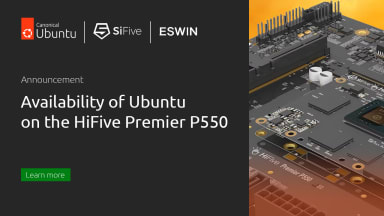
We are pleased to announce that SiFive, ESWIN Computing and Canonical are enabling Ubuntu 24.04 LTS on the HiFive Premier P550, a development platform that offers a premium RISC-V development experience, an important milestone for the RISC-V development community. This collaboration ensures that developers who purchase the HiFive Premier

I always find the Olympics to be an unusual experience. I’m hardly an athletics fanatic, yet I can’t help but get swept up in the spirit of the competition. When the Olympics took place in Paris last summer, I suddenly began rooting for my country in sports I barely knew existed. I would spend random

Canonical is excited to return to the Mobile World Congress (MWC), taking place in Barcelona on March 3-6, 2025. Come and see us at Booth 2A90, Hall 2. Next year’s event brings attendees together around a new theme: Converge. Create. Connect. This edition will delve into topics like enterprise reinvention and cover how organizations can r

Today, Canonical, the publisher of Ubuntu, announced its new Ubuntu Security Research Alliance Program, a free partnership between Canonical and open source vulnerability scanning organizations. The goal is to ensure vulnerability data is more transparent and standardized, while improving on-platform security for Ubuntu users through more

Typically, a technical writer takes the product created by a development team, and writes the documentation that expresses the product to its users. At Canonical we take a different approach. Documentation is part of the product. It’s the responsibility of the whole team. Documentation work is led by a technical author, who is part of the

Newsletter signup

Canonical, the company behind Ubuntu, is proud to sponsor HPE Discover More in Mumbai. Join us to learn how Canonical and Hewlett Packard Enterprise (HPE) can help you securely advance your business with comprehensive open source solutions that span from infrastructure to MLOps platforms. Register to HPE Discover More – Mumbai What to exp
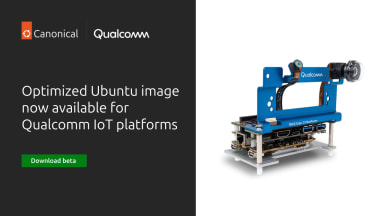
Today Canonical, the publisher of Ubuntu, and Qualcomm® Technologies announce the official beta launch of the very first optimized image of Ubuntu for Qualcomm® IoT Platforms. Through this beta program, developers will be able to download and use Ubuntu 22.04 LTS for the Qualcomm® RB3 Gen 2 Vision kit, which runs on the Qualcomm® QCS6490

Industrial cybersecurity is on every CISO’s mind as manufacturers strive to integrate their IT and OT operations to drive efficiency and productivity. However, with increased connectivity comes heightened risk. This means that securing devices, networks, and systems is a critical challenge. Canonical, the publisher of Ubuntu, recognizes t
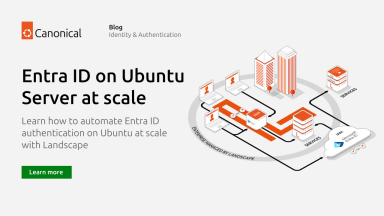
Authd allows Entra ID authentication on both Ubuntu Desktop and Server. Learn how to configure Authd at scale using Landscape and Cloud-init

With automation spanning virtually every sector of society, real-time capable operating systems (OS) are becoming critical across industries, from automotive and telecommunications, to industrial manufacturing. A real-time operating system (RTOS) ensures precise and deterministic responses, meeting strict timing requirements essential fo
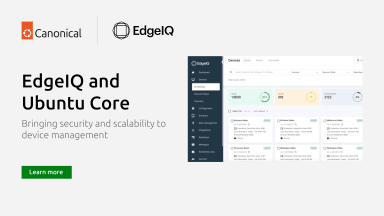
Today, EdgeIQ and Canonical announced the release of the EdgeIQ Coda snap and official support of Ubuntu Core on the EdgeIQ Symphony platform. EdgeIQ Symphony helps you simplify and scale workflows for device fleet operations, data consumption and delivery, and application orchestration. Distributing EdgeIQ Coda as a snap brings the power
Ubuntu 20.04 LTS (Focal Fossa) has reached the end of its standard five-year support window on 31 May 2025. It’s time to start thinking about your options for upgrading. What is an Ubuntu long-term support (LTS) release? Ubuntu long-term support releases (LTS) are released every 2 years by Canonical. Canonical provides patching and maint
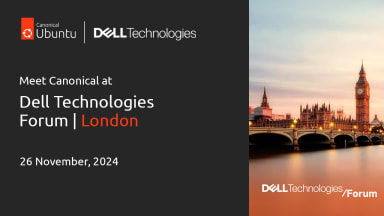
Canonical is excited to be partnering with Dell Technologies at the upcoming Dell Technologies Forum – London, taking place on 26th November. This prestigious event brings together industry leaders and technology enthusiasts to explore the latest advancements and solutions shaping the digital landscape. Register to Dell Technologies Forum
Ubuntu tech blog
Deep dives for developers
Visit the Ubuntu Tech Blog for deep dives into product features, step-by-step tutorials, and the latest updates from Canonical's engineering teams.